PP polymer guide for material selection, uses and limits
a[data-rs-seo-link]{text-decoration:underline!important;color:#1a56db!important;cursor:pointer!important;}a[data-rs-seo-link]{text-decoration:underline!important;color:#1a56db!important;cursor:pointer!important;}
PP polymer at a glance
PP polymer, or polypropylene, is a semi-crystalline thermoplastic polyolefin made from propylene monomer. In material selection, it is often chosen when a part needs low density, good fatigue resistance, useful chemical resistance, straightforward processing and competitive cost. It is not a universal material. Unmodified PP has limited outdoor UV stability, can become brittle at low temperatures, and does not match engineering plastics where high stiffness, high heat resistance or structural load capacity is required. The right choice depends on the exact grade, including homopolymer PP, random copolymer PP, impact copolymer PP, filled PP and reinforced PP.
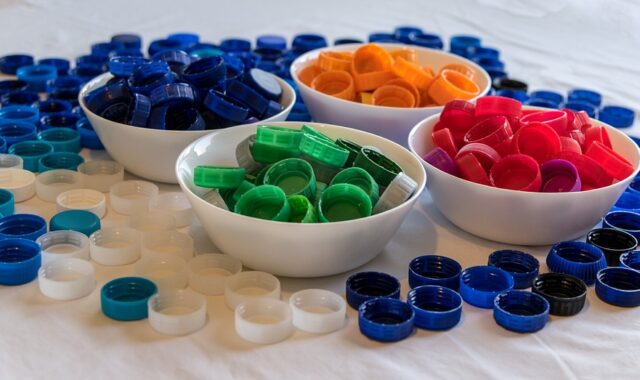
For a broader comparison with other resin families, see the Polymer Selection section. PP is often a practical starting point for packaging, hinges, caps, containers, automotive trim, appliances, fibers, nonwovens and laboratory items. Each application still needs to be checked against temperature, chemical exposure, load, appearance, regulatory requirements and recycling expectations.
| Selection point | What it means for PP |
|---|---|
| Polymer family | Polypropylene, a polyolefin and commodity thermoplastic |
| Typical density | Often around 0.90 g/cm³, making it one of the lighter widely used plastics |
| Thermal behavior | Semi-crystalline with a melting range that depends on grade, commonly near the 160°C range for many isotactic homopolymer grades |
| Resin identification | ASTM resin identification code 5, marked as PP on many molded articles |
| Processing routes | Injection molding, extrusion, blow molding, thermoforming, film, sheet, fibers and nonwovens |
| Main caution | Properties change significantly by grade, filler, stabilizer package and service environment |
Why PP behaves differently from other commodity plastics
PP is semi-crystalline, meaning its polymer chains form both ordered crystalline regions and less ordered amorphous regions. This structure helps explain several familiar PP characteristics: low water absorption, low density, good resistance to many aqueous chemicals and a useful balance of stiffness and toughness. The methyl group on the polypropylene chain also gives PP different stiffness and heat behavior from polyethylene.
One of PP’s most valued properties is fatigue resistance in thin sections. Properly designed PP living hinges can flex repeatedly because the material can tolerate cyclic bending when hinge geometry, flow direction and molding conditions are controlled. This is why PP is widely used for flip-top caps, snap features and integral hinges. The benefit should not be applied too broadly, however. Thick sections, sharp corners, weak weld lines, low service temperatures or incompatible fillers can reduce toughness and shorten hinge life.
PP also has low surface energy. That can help with release and stain resistance, but it makes printing, painting, adhesive bonding and overmolding more difficult unless the surface is treated or the system is designed for PP. Designers should plan surface treatment, mechanical fastening or compatible tie layers early, rather than treating decoration or bonding as a final production detail.
Main PP polymer grades and how they differ
Homopolymer PP
Homopolymer PP is generally selected for stiffness, heat resistance and dimensional performance compared with many softer PP copolymers. It is used in rigid packaging, housewares, caps, appliance components and some industrial parts. The trade-off is impact performance, especially at lower temperatures. If a part may be dropped, flexed or installed in cold conditions, homopolymer PP should be compared with an impact copolymer or another tougher resin.
Random copolymer PP
Random copolymer PP incorporates a small amount of comonomer, often ethylene, into the polymer chain. Depending on formulation, this can improve clarity, flexibility and toughness compared with homopolymer PP. It is common in transparent or translucent packaging, medical products and consumer products where appearance and a softer feel matter. It may not provide the same stiffness or heat resistance as a comparable homopolymer grade.
Impact copolymer PP
Impact copolymer PP is designed to improve toughness by including a rubbery phase, often based on ethylene-propylene chemistry. It is widely used in automotive components, durable containers, battery cases and impact-prone molded parts. The trade-off can include lower gloss, reduced clarity and different shrinkage behavior. For parts with tight tolerances, the molder should evaluate shrinkage data for the exact grade rather than assume all PP grades behave the same way.
Filled and reinforced PP
Mineral-filled, talc-filled and glass-reinforced PP grades are used when standard PP is not stiff enough or when dimensional stability must be improved. Talc can increase stiffness and help control shrinkage. Glass fiber can raise stiffness and strength more significantly, but it may reduce impact performance, affect surface finish and increase tool wear. Filled PP is especially common in automotive trim, appliance housings and structural brackets where lightweighting and cost control matter.
Common applications and what they reveal about PP
PP has a broad application range because the polymer can be tuned through copolymer structure, melt flow, fillers, nucleating agents, impact modifiers and stabilizers. Packaging is one of its most visible uses. Food tubs, caps, closures, microwaveable containers and thin-wall packaging often use PP because it combines low weight, processability and useful heat resistance. Food-contact suitability is not automatic. In the United States, food-contact applications must be assessed against applicable FDA requirements such as 21 CFR 177.1520 and the specific grade’s compliance statement.
Automotive applications use PP because it offers a practical balance of weight, cost and design freedom. Interior trim, underbody shields, battery housings and bumper-related compounds may use modified or filled PP grades. In these cases, the base polymer is only one part of the decision. Impact modifiers, talc, glass fiber, UV stabilizers, colorants and flame-retardant systems can determine whether the final compound meets the performance target.
Fibers and nonwovens are another important PP area. PP can be processed into spunbond and meltblown materials, carpets, ropes, geotextiles and hygiene products. Low density and chemical resistance are useful in these applications, while heat exposure, sunlight and long-term mechanical load remain important limits.
Laboratory and chemical-handling items also use PP because it resists many acids, bases and aqueous salt solutions. This does not mean PP is resistant to every chemical. Strong oxidizers, certain hydrocarbons, chlorinated solvents, elevated temperatures and long exposure times can cause swelling, cracking or loss of mechanical performance. Chemical compatibility should always be checked against the exact chemical concentration, temperature and exposure duration. See also: Buying Guides.
Performance limits that should not be ignored
The first major limitation is low-temperature impact. Standard PP can lose toughness as temperature drops, making it less suitable for freezer use, winter transport or cold outdoor service unless a suitable copolymer or modified grade is used. Impact copolymer PP can help, but the required test temperature should be specified rather than described only as “cold resistant.”
The second limitation is UV and oxidation. Unstabilized PP can degrade under prolonged sunlight and heat, leading to chalking, discoloration, cracking or embrittlement. Outdoor parts should use UV-stabilized grades, suitable pigments and realistic weathering tests. Black compounds with carbon black can often perform better outdoors than natural or lightly colored grades, but performance still depends on the complete formulation.
The third limitation is creep. PP can deform under constant load over time, particularly at elevated temperature. A part that passes a short-term strength test may still sag, loosen or lose sealing pressure during service. Snap fits, load-bearing brackets, threaded features and gasketed closures should be evaluated for long-term stress relaxation and creep, not only peak load.
The fourth limitation is surface compatibility. Printing, labeling, painting, gluing and sealing require attention because PP’s low surface energy can reduce adhesion. Corona treatment, flame treatment, plasma treatment, primers, mechanical locks or compatible adhesives may be needed. If appearance is critical, decoration trials should be completed before tooling is finalized.
PP polymer versus PE, ABS, PA and PC
| Comparison | Where PP often helps | Where the alternative may be stronger |
|---|---|---|
| PP vs HDPE | PP usually offers higher stiffness and better heat resistance for many molded parts, plus strong hinge performance. | HDPE can offer excellent toughness and environmental stress crack resistance in containers and tanks, depending on grade. |
| PP vs ABS | PP is lighter and usually has better resistance to many aqueous chemicals. | ABS often provides better surface finish, easier painting and higher rigidity for consumer housings. |
| PP vs PA | PP absorbs very little moisture and is often lower cost. | Nylon can provide higher strength, wear resistance and heat capability, but moisture changes its dimensions and properties. |
| PP vs PC | PP offers low density, chemical resistance and cost advantages in non-transparent parts. | Polycarbonate provides much higher impact strength, optical clarity and heat performance in demanding applications. |
The practical point is that PP should not be selected only because it is familiar or inexpensive. It should be selected when its property balance matches the service environment. If the design needs high transparency, high structural stiffness, premium painted appearance, high continuous heat or extreme impact resistance, another polymer or a modified compound may be more appropriate.
A practical PP material selection checklist
- Define the service temperature. Include peak heat, cold exposure, cleaning temperature, transport conditions and storage environment.
- List all chemical contacts. Include cleaners, oils, foods, fragrances, disinfectants, fuels, adhesives and accidental exposure.
- Choose the right grade family. Compare homopolymer, random copolymer, impact copolymer, filled and reinforced PP before choosing a melt flow grade.
- Check processing requirements. Thin-wall molding, living hinges, film, fiber and extrusion profiles may require very different melt flow and molecular weight distribution.
- Evaluate dimensional behavior. PP shrinkage can be significant and anisotropic, especially in filled or fiber-reinforced compounds.
- Confirm regulatory status. Food contact, medical, electrical, automotive and potable-water uses may require specific compliance documentation.
- Plan end-of-life communication. PP is commonly identified by resin code 5, but local recycling acceptance depends on product format, contamination, sorting infrastructure and market demand.
Frequently asked questions
Is PP polymer the same as polypropylene?
Yes. PP is the standard abbreviation for polypropylene. In material datasheets, PP may refer to a broad family of polypropylene grades, including homopolymer, random copolymer, impact copolymer and filled compounds.
Is PP a good plastic for living hinges?
PP is one of the most common plastics for living hinges because suitable grades can withstand repeated flexing in thin sections. The design still needs correct hinge thickness, radius, flow orientation and molding control. A poor hinge design can fail even when the base resin is PP.
Can PP be used for food-contact products?
Many PP grades are used in food packaging and containers, but food-contact suitability is grade-specific and application-specific. The supplier should provide compliance documentation for the intended market, food type and temperature condition.
Is PP recyclable?
PP is technically recyclable and is identified as resin code 5. The code identifies the resin family; it does not guarantee that a local recycling program accepts every PP item. Rigid containers, films, caps and mixed-material products can follow different recycling routes.
When should PP not be the first choice?
PP may not be the first choice for parts needing high outdoor weatherability without stabilization, high structural stiffness at elevated temperature, easy painting without treatment, very low-temperature impact or premium optical clarity. In those cases, compare PP with ABS, PC, PA, PBT, PET, HDPE or a specialty compound.