Polypropylene applications and material selection in plastic product design
a[data-rs-seo-link]{text-decoration:underline!important;color:#1a56db!important;cursor:pointer!important;}a[data-rs-seo-link]{text-decoration:underline!important;color:#1a56db!important;cursor:pointer!important;}
Why polypropylene is used across plastic applications
Polypropylene is a semi-crystalline thermoplastic made from propylene monomer and commonly abbreviated as PP. In product design, its value comes from a practical balance of properties: it is lightweight, reasonably tough, resistant to many everyday chemicals and compatible with high-volume processes such as injection molding, extrusion, film production, blow molding and fiber spinning. Public technical references such as PubChem and HSDB list polypropylene as less dense than water, with a typical density of around 0.90 to 0.92 g/cm³ and a melting point often near 160 to 165°C for common isotactic grades.
Those characteristics make polypropylene relevant to packaging, automotive interiors, household goods, medical disposables, textiles, appliance parts, caps, closures and industrial components. It is not the strongest plastic, and it is not the best choice for every high-temperature or tight-tolerance application. It is also not automatically recyclable simply because it carries resin identification code 5. Even so, when a part needs a light, moldable and chemically resistant material, polypropylene is often shortlisted early.
For more material-use discussions across sectors, visit the Product Applications section.
Key properties that explain polypropylene performance
Polypropylene is often grouped with commodity plastics, but its performance depends heavily on grade, molecular structure, additives, fillers and processing history. A thin film, a living hinge, an automotive trim part and a medical syringe barrel may all use PP, yet the formulations and performance requirements can be very different.
| Property or feature | Typical implication for applications |
|---|---|
| Low density | Useful for lightweight packaging, automotive parts and products where weight reduction matters. |
| Melting point around 160 to 165°C for many common grades | Allows use in many hot-fill, dishwasher-safe or moderately heated applications, but not in high-temperature engineering environments without careful grade selection. |
| Good chemical resistance | Suitable for many caps, containers, labware and household chemical packaging, depending on the chemical, concentration and temperature. |
| Fatigue resistance | Supports living hinges, flip-top closures and repeated-flexing designs when geometry and processing are correct. |
| Moisture resistance | Helps maintain dimensional stability in humid environments and makes PP useful for food, personal care and household items. |
| UV sensitivity without stabilization | Outdoor parts usually need UV stabilizers, pigments or protective design measures. |
| Lower surface energy | Printing, coating, labeling and bonding may require corona treatment, plasma treatment, primers or compatible adhesive systems. |
The main point for designers is that polypropylene should not be selected by resin name alone. Homopolymer PP, random copolymer PP, impact copolymer PP and filled or reinforced PP should be compared against the actual targets for stiffness, impact resistance, clarity, heat performance, shrinkage, regulatory status and recycling goals.
Common polypropylene applications by sector
Packaging and food-contact items
Packaging is one of the largest application areas for polypropylene. PP is used in rigid tubs, caps, closures, microwaveable containers, trays, pouches, woven sacks, films and labels. Its low density helps reduce material weight, while its moisture resistance and chemical resistance make it useful for many dry foods, sauces, personal care products and household products.
Food-contact use requires more than choosing a plastic called PP. In the United States, the FDA lists authorized food-contact substances and relevant provisions under 21 CFR, including olefin polymer requirements. In practice, a food-contact polypropylene article must use compliant resins, additives and colorants, and it must match the intended food type, contact time and temperature conditions. Similar checks are required in other regions under local food-contact frameworks.
Automotive and mobility components
Automotive manufacturers use polypropylene because it supports lightweighting, design flexibility and cost control. Typical examples include interior trim, instrument panel components, door panels, battery cases, bumper-related parts and under-hood components where the grade is suitable. Mineral-filled, talc-filled and impact-modified PP grades are common when stiffness, dimensional stability or impact performance must be improved.
Polypropylene also competes with ABS, polyethylene, polyamide and engineering blends, depending on the target performance. PP is attractive when the part needs low weight and chemical resistance. It may need reinforcement or modification, however, when heat exposure, low-temperature impact, surface appearance or dimensional tolerance is more demanding.
Medical and healthcare products
Polypropylene is widely used in medical disposables, labware, diagnostic consumables and nonwoven fabrics. Syringe components, specimen containers, pipette tips, centrifuge tubes, trays and certain sterilization packaging materials may use PP grades designed for medical applications. Nonwoven PP is also important in masks, gowns, drapes and hygiene products.
Medical use requires careful qualification. Device manufacturers must consider biocompatibility, extractables and leachables, sterilization method, regulatory documentation and lot-to-lot consistency. PP can be compatible with several sterilization routes, but performance depends on formulation, dose, temperature and product geometry. Gamma radiation, ethylene oxide, steam and other methods can affect different PP grades in different ways, so sterilization validation should be based on the actual material and finished device design.
Consumer goods and appliances
Housewares, storage bins, furniture components, luggage parts, toys, appliance housings and small mechanical parts often use polypropylene. The material is easy to mold, can provide a durable tactile feel and can be colored in many ways. PP is also well known for living hinges in products such as flip-top caps and small containers, where repeated bending is required.
For visible consumer products, surface quality and scratch resistance matter. Designers may need to compare gloss, texture, pigment stability, mold temperature, gate design and shrinkage behavior. If the product needs a premium appearance, paintability or strong adhesive bonding, PP may require additional surface treatment or a different material choice.
Fibers, textiles and industrial products
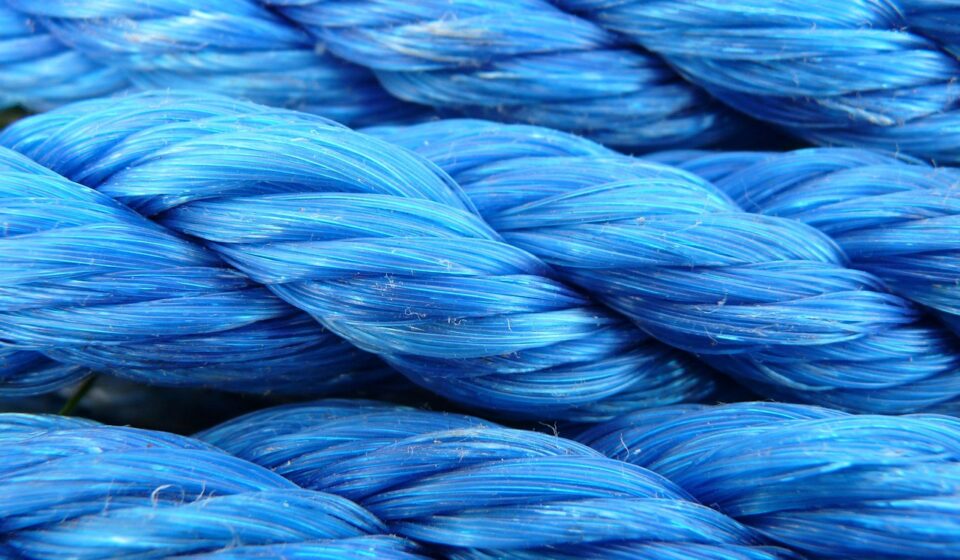
Polypropylene fibers are used in carpets, ropes, geotextiles, filtration media, nonwovens, reusable bags and industrial fabrics. The material resists moisture and many chemicals, making it suitable for outdoor and industrial settings when UV protection and mechanical requirements are addressed. In woven sacks and raffia applications, PP offers a useful balance of strength, low weight and process efficiency.
Choosing the right polypropylene grade
The word polypropylene covers a broad family of materials. A grade that works well for a transparent food container may fail in a cold-impact automotive part. A grade designed for a fiber line may not mold properly into a thick-wall enclosure. Selection should start with application requirements rather than a generic resin name.
- Homopolymer PP usually offers higher stiffness and heat resistance than many copolymer grades, making it useful for rigid molded goods, fibers and some packaging.
- Random copolymer PP often improves clarity and flexibility and can be used in transparent containers, medical items and packaging where appearance matters.
- Impact copolymer PP improves toughness, especially in more demanding molded applications such as automotive parts, crates, containers and appliance components.
- Filled or reinforced PP uses talc, glass fiber, minerals or other modifiers to improve stiffness, heat deflection or dimensional stability, but it may reduce impact performance or change processing behavior.
- Specialty PP grades may target high melt strength, low extractables, high clarity, controlled shrinkage, flame retardance, conductivity or specific regulatory needs.
Important selection data include melt flow rate, tensile properties, flexural modulus, impact strength, heat deflection temperature, shrinkage, chemical resistance, flammability rating, food-contact status, medical documentation and recyclability compatibility. Processing conditions should also be reviewed because gate location, wall thickness, cooling rate and mold temperature can affect warpage, crystallinity and final dimensions. See also: Buying Guides.
Where polypropylene may not be the best choice
Polypropylene is versatile, but it has clear limits. It can become brittle at low temperatures unless modified. It is vulnerable to ultraviolet degradation if exposed outdoors without stabilizers. Its surface is difficult to bond or print without treatment. It also has higher shrinkage than some amorphous plastics, which can complicate tight-tolerance parts.
Heat performance is another important boundary. Although PP has a higher melting point than many polyethylene grades, long-term service at elevated temperature depends on load, additives, wall thickness and part design. A container that survives short microwave reheating does not prove that the same resin can work in a structural component under continuous heat and stress.
Chemical resistance also needs to be checked under real service conditions. PP generally resists many acids, bases and aqueous solutions, but strong oxidizing agents, certain hydrocarbons, oils or high-temperature exposures may cause swelling, stress cracking or property loss. Material compatibility charts are useful early references, but critical applications should rely on testing with the actual chemical, concentration, temperature and exposure time.
Recycling and circular design considerations
Polypropylene is identified by resin identification code 5. ASTM D7611 makes an important distinction: resin identification codes are not recycling codes, even though they can help recycling systems identify plastic types. A code 5 mark tells readers the primary resin family, but it does not guarantee that the item is accepted by a local recycling program or that its design is compatible with recycling.
Recyclability depends on collection access, sorting technology, product format, color, labels, adhesives, closures, fillers, contamination and end-market demand. A clear or natural rigid PP container may have a different recycling pathway than a black automotive part, a multilayer film or a fiber product. Packaging designers increasingly use guidance from organizations such as the Association of Plastic Recyclers to evaluate how labels, inks, pigments, closures and barrier layers affect PP recycling streams.
For circular design, the practical questions are straightforward:
- Can the part be collected in the market where it will be sold or used?
- Can sorting systems identify it as PP?
- Are labels, adhesives, inks and closures compatible with the PP recycling stream?
- Can recycled PP meet the mechanical, color, odor and regulatory requirements of the next application?
- Does the design avoid unnecessary multilayer structures or mixed-material assemblies?
Post-consumer recycled PP can be valuable in many non-food and selected controlled applications, but food-contact and medical uses require additional regulatory and quality controls. Circular design should therefore be considered early in material selection, not after tooling and labeling decisions are already fixed.
Practical selection checklist
Before specifying polypropylene for a new plastic product, teams should define the service environment and testing plan. A clear checklist reduces the risk of selecting a grade that processes well but fails in use.
- Define the application load. Include impact, flexing, compression, creep, drop performance and expected product life.
- Set the temperature window. Consider storage, transport, washing, filling, sterilization, microwave exposure or outdoor heat.
- Check chemical contact. Review all liquids, oils, cleaners, fragrances, disinfectants and additives that may touch the part.
- Confirm regulatory needs. Food-contact, medical, electrical and automotive applications may require specific documentation and testing.
- Review processing method. Injection molding, extrusion, thermoforming, fiber spinning and blow molding may require very different melt flow and formulation choices.
- Evaluate appearance and finishing. Check color, gloss, haze, texture, printing, coating, laser marking, labeling and bonding requirements.
- Plan for end of life. Consider whether the design supports repair, reuse, collection, sorting and recycling in the intended market.
Frequently asked questions
Is polypropylene the same as plastic number 5?
In resin identification systems, number 5 usually indicates polypropylene. However, the number identifies the resin family; it does not automatically mean the item is recyclable in every location.
Is polypropylene safe for food packaging?
Polypropylene can be used in food-contact packaging when the resin, additives, colorants and finished article comply with applicable food-contact regulations and use conditions. A generic PP label alone is not enough to confirm compliance.
What is the main advantage of polypropylene over polyethylene?
Compared with many polyethylene grades, polypropylene typically offers higher stiffness and higher heat resistance. Polyethylene may perform better in some low-temperature impact, flexibility or stress-cracking situations, so the better choice depends on the application.
Can polypropylene be used outdoors?
Yes, but outdoor PP usually needs UV stabilizers, suitable pigments or protective design measures. Unstabilized PP can degrade under long-term sunlight exposure.
Why is polypropylene popular in automotive parts?
Automotive applications value polypropylene because it is lightweight, moldable, cost-efficient and available in impact-modified or filled grades. It helps reduce part weight while supporting complex interior and exterior component designs.