How to choose large plastic storage boxes for long-term storage

a[data-rs-seo-link]{text-decoration:underline!important;color:#1a56db!important;cursor:pointer!important;}a[data-rs-seo-link]{text-decoration:underline!important;color:#1a56db!important;cursor:pointer!important;}
What makes a large plastic storage box reliable?
Large plastic storage boxes protect items from dust, handling damage, light exposure, and everyday moisture better than open shelving or cardboard in many storage areas. Reliability, however, is not just a matter of buying the largest box available. The box needs to match the contents, carry the expected load without deforming, close securely, and suit the room, shelf, vehicle, or work area where it will be kept.
For general household, office, and workplace storage, polypropylene and high-density polyethylene are common choices. For sensitive paper, photographs, textiles, or collectibles, preservation guidance often favors clean polyethylene, polypropylene, or polyester materials and warns against PVC and unknown plastics.

This guide focuses on practical selection and care. It does not treat every storage tote as food-safe, chemical-safe, or archival-safe by default. If you are storing food, chemicals, medical supplies, photographs, or valuable records, the label and material information matter as much as the size. For more related storage guidance, visit the Care and Storage section.
Match the plastic material to the storage job
Plastic storage boxes can look similar while behaving differently over time. The resin identification code molded into a product can help identify the base resin, but it should not be treated as a full performance certificate. ASTM guidance on resin identification codes explains that the code identifies the resin type; it does not prove that an item is recyclable, food-safe, or suitable for every storage condition. The same resin can also perform differently depending on wall thickness, additives, molding quality, pigments, and product design.
| Material | Common storage use | Key caution |
|---|---|---|
| Polypropylene | Household totes, bins, organizers, lids, and many molded containers | Good for many indoor uses, but check the product rating before heavy stacking, cold impact, food contact, or outdoor exposure. |
| High-density polyethylene | Durable boxes, drums, outdoor-style bins, and containers needing toughness | Often valued for toughness and chemical resistance, but still needs UV protection or a product-specific outdoor rating. |
| Polyethylene, polypropylene, or polyester for preservation | Archival sleeves, liners, bags, or bins for papers and collections | Use clean, uncoated materials where preservation is important; avoid unknown plastics. |
| Polycarbonate | Clear rigid containers in some applications | Some polycarbonate products may involve BPA concerns in food-contact contexts, so do not assume suitability without labeling. |
| PVC or unknown plastic | Occasionally found in flexible storage products or older containers | Preservation sources commonly advise avoiding PVC for long-term contact with paper, photographs, and collection materials. |
For garage tools, seasonal decorations, fabric, or office supplies, a well-made polypropylene or HDPE box is usually more relevant than a specialized preservation material. For documents, photographs, or collectibles, the storage environment and plastic chemistry become more important. The Library of Congress and the National Archives both recommend polyethylene, polypropylene, or polyester enclosures for many preservation uses and advise against PVC because of potential long-term damage to sensitive materials.
Size large boxes around handling, not just volume
A common mistake is choosing a very large box and then filling it with dense items. Volume and carry weight are different issues. Bedding, pillows, holiday garlands, and plastic decorations can use a large container efficiently because they are bulky but light. Books, tools, metal hardware, tile samples, or liquids can make the same container difficult or unsafe to move.
Before choosing a box size, measure the shelf, closet, vehicle, or pallet area where it will be stored. Leave space for hands to lift the box and for the lid to clear the shelf above it. A box that technically fits but cannot be removed easily will encourage dragging, twisting, and lid damage. If the contents are heavy, several medium boxes are usually more practical than one oversized bin.
- For bulky light items: choose deeper boxes with wide lids, but avoid stacking too high if the walls flex.
- For dense items: choose smaller boxes with reinforced bases and handles.
- For frequently accessed items: use shallower boxes so contents are visible and easy to reach.
- For shelving: match box depth to shelf depth to prevent overhang and bending.
- For moving: prioritize grip, lid security, and manageable loaded weight over maximum capacity.
Clear boxes make contents easier to identify, while opaque boxes reduce light exposure and hide visual clutter. For long-term storage of light-sensitive materials, opaque or dark-colored boxes may be a better fit than transparent containers.
Design details that affect durability
Lids and rims
The lid is often the weakest part of a storage system. Snap lids are convenient for indoor household storage, but they are not the same as gasketed, latched, or rated waterproof containers. A flat lid may be easier to stack; a raised lid can add internal headroom but may reduce stacking stability. Look for lids that seat evenly on the rim, resist bowing, and can be replaced if damaged.
Handles and lift points
Large boxes need strong lift points because the load passes through the handles every time the box is moved. Thin molded lips may be enough for light contents. Heavier loads are better suited to recessed handles or reinforced side grips. If a box flexes sharply when lifted empty, it may deform further once filled.
Stacking ribs and base shape
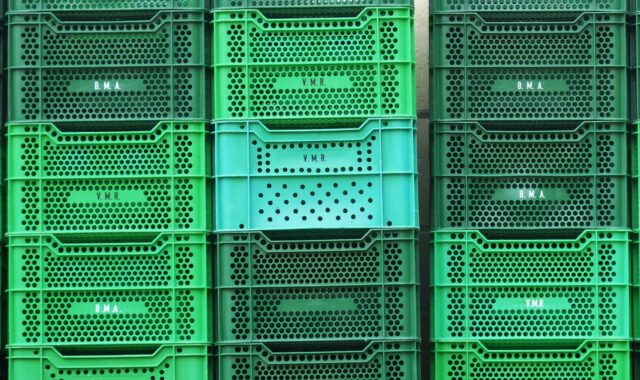
Stacking stability depends on more than lid strength. Many boxes use ribs, grooves, or molded feet to help one box nest on another. These features can distribute weight more evenly, but they do not replace the manufacturer’s stacking recommendations. Heavy boxes should stay low. Fragile, flexible, or heat-sensitive items should not be placed under long-term compression.
Wall thickness and flexibility
Thicker walls can improve stiffness, but flexibility is not always a defect. Some plastics absorb impact better when they flex slightly. The right balance depends on the contents. A rigid box may protect flat records or equipment; a slightly flexible tote may perform better for general household handling. The key is controlled flexibility, not sagging, whitening at stress points, or cracking around corners.
Storage conditions matter as much as the box
Even a good box can perform poorly in the wrong environment. Heat, sunlight, high humidity, freezing impact, solvents, and excessive stacking can shorten service life. UV exposure is especially important outdoors or near windows because many plastics become weaker and more brittle after prolonged light exposure unless they are stabilized for that use. If a box will stay on a balcony, patio, truck bed, shed, or other bright location, choose a product specifically described for outdoor service.
Temperature also affects handling. In cold conditions, some plastics become less forgiving under impact. A box that works well indoors can crack if dropped or struck when very cold. In hot storage rooms, attics, or vehicles, lids may warp and walls may soften under load. Avoid placing heavy boxes on top of containers stored in high heat.
Humidity is another common problem. A sealed or nearly sealed plastic box can trap moisture from damp contents. Preservation guidance from libraries and archives notes that plastic containers in high-humidity areas can increase mold risk. Before closing a box for long-term storage, make sure fabrics, papers, tools, and seasonal items are clean and dry. If the storage area is damp, consider ventilation, desiccants suitable for the contents, or a different storage location. See also: Buying Guides.
- Dry items fully before packing them.
- Clean the inside of the box with mild soap and water, then let it dry completely.
- Avoid strong solvents unless the container maker says the plastic is compatible.
- Keep boxes away from heaters, direct sunlight, and sharp metal edges.
- Label boxes on the side as well as the lid so labels remain visible when stacked.
Food, chemicals, and sensitive items need extra caution
Not every large plastic storage box is suitable for food. A general-purpose storage tote may not be made, tested, or labeled for direct food contact. For flour, rice, pet food, or packaged foods, choose containers clearly marked for food storage and follow the product’s temperature and cleaning instructions. U.S. FDA materials on food-contact substances distinguish between plastics intended for food contact and general plastic products, so the label should guide the decision rather than appearance alone.
Chemical storage is even more specific. Paints, solvents, oils, pool chemicals, pesticides, batteries, and cleaning products can react differently with plastics. HDPE and polypropylene are often used in many chemical-resistant applications, but compatibility depends on the exact chemical, concentration, temperature, and exposure time. When the contents are hazardous, use the original container where possible and follow the safety data sheet and local storage rules.
For sensitive collections, avoid treating airtight plastic storage as automatically safer. Photographs, paper, leather, metals, and textiles can each have different needs. Clean polypropylene, polyethylene, or polyester materials are commonly referenced in preservation guidance, but long-term success still depends on dryness, stable temperature, separation from acidic materials, and avoiding direct contact with questionable plastics, adhesives, foams, or rubber bands.
Recycling and end-of-life considerations
Large plastic storage boxes are usually bought for reuse, and reuse is often the most practical environmental benefit. Keep lids paired with bases, avoid overloading, and clean boxes before changing their use. A box that is no longer suitable for documents may still work for garden tools, sports gear, or seasonal decorations.
When a box finally cracks, recycling is not guaranteed. EPA consumer guidance explains that local recycling programs decide which plastic items they accept, and resin codes are only one part of that decision. Large rigid boxes may be refused by curbside programs because of size, shape, color, additives, or local sorting equipment. Check the rules for your local program before placing a storage box in a recycling bin.
If recycling is not available, consider repair for non-critical uses, donation if the box is still functional, or reuse as a garage organizer. Do not use cracked boxes for heavy loads, food storage, chemical storage, or valuables that need reliable protection.
Quick selection checklist
- Identify the contents first: light, heavy, fragile, food-related, chemical, archival, or outdoor.
- Choose a material suited to the job, commonly polypropylene or HDPE for general storage.
- Use only food-contact containers for loose food or direct food storage.
- Avoid PVC and unknown plastics for photographs, documents, and valuable collections.
- Choose several manageable boxes instead of one overloaded large box for dense items.
- Check lid fit, handle strength, wall stiffness, and stacking features before buying multiples.
- Store boxes away from direct sun, high heat, standing water, and damp rooms.
- Keep contents clean and dry before sealing the lid.
- Label boxes clearly and keep an inventory for long-term storage.
- Confirm local recycling rules before assuming a damaged box can go in curbside recycling.
Frequently asked questions
Are large plastic storage boxes waterproof?
Most are water-resistant, not fully waterproof. A snap-on lid may block dust and light splashes, but it may not stop wind-driven rain, flooding, or long-term dampness. For wet locations, look for a gasketed or rated container and keep valuable contents elevated.
What plastic is best for long-term household storage?
For general indoor storage, polypropylene and HDPE are common, practical choices. For papers, photographs, and collection materials, preservation sources often recommend clean polyethylene, polypropylene, or polyester and advise avoiding PVC or unidentified plastics.
Can I use a large storage tote for food?
Only if it is clearly labeled for food contact and used according to its instructions. A general-purpose tote may look clean and sturdy but still not be intended for loose grains, pet food, or direct food contact.
Do recycling numbers mean the box is recyclable?
No. The resin number helps identify the plastic type, but local recycling programs decide what they accept. Size, shape, color, and sorting equipment can all affect whether a large box is recyclable in a specific area.
How can I keep plastic boxes from cracking?
Avoid overloading, dropping boxes in cold conditions, stacking heavy bins too high, and storing non-outdoor boxes in direct sunlight. Replace boxes that show cracks, stress whitening, broken handles, or lids that no longer seat properly.