How to choose and use a stackable storage bin for plastic materials

a[data-rs-seo-link]{text-decoration:underline!important;color:#1a56db!important;cursor:pointer!important;}a[data-rs-seo-link]{text-decoration:underline!important;color:#1a56db!important;cursor:pointer!important;}
Why stackable storage bins work well for plastic materials
A stackable storage bin is useful when plastic materials need to stay visible, separated, and protected without taking up unnecessary shelf or floor space. Its value is not limited to vertical stacking. A well-chosen bin system can help prevent contamination, keep small parts from mixing, reduce handling damage, and make inventory easier to rotate. For plastic sheets, pellets, offcuts, molded parts, maintenance supplies, and household items, the bin should match the material weight, storage environment, labeling needs, and cleaning routine.
For anyone comparing storage options, the practical question is straightforward: will the bin protect the contents while remaining safe and convenient to use over time? The answer depends on resin type, wall thickness, lid design, stack load, ventilation, temperature exposure, and how often the bin is moved. This article focuses on care and storage decisions rather than brand rankings or product claims. For related storage topics, visit the Care and Storage section.

Match the bin material to the storage environment
Most general-purpose stackable bins are made from polypropylene, polyethylene, or similar durable plastics. These materials are widely used because they are lightweight, moisture resistant, and easier to clean than cardboard or wood. Even so, not every plastic bin performs the same way in every environment.
Polypropylene is often used for rigid storage totes and small-parts bins because it offers a practical balance of stiffness and chemical resistance. High-density polyethylene is commonly associated with tougher, more impact-resistant containers. Clear bins may use other plastics when visibility is the priority. A resin identification code can help identify the plastic family, but it should not be treated as a complete performance specification. ASTM’s resin identification system is intended to identify resin type, not to prove recyclability, food-contact safety, or load capacity.
When choosing a bin, start with these conditions:
- Temperature: Avoid using ordinary storage bins near heaters, ovens, hot machinery, or freezing areas unless the bin is rated for those conditions.
- Sunlight: Long-term ultraviolet exposure can discolor or weaken many plastics, especially if the bin is not UV stabilized.
- Chemicals: Cleaning agents, oils, solvents, and adhesives may affect some plastics. Use the manufacturer’s material guidance for chemical exposure.
- Moisture: Plastic bins resist water, but trapped moisture can still damage labels, packaging, paper inserts, metal parts, or hygroscopic plastic materials.
- Load: A bin that works well for lightweight packaging may deform under dense pellets, metal fasteners, or heavy molded parts.
Food-related storage requires stricter selection. A container used for direct food contact should be specifically suitable for that use. The U.S. Food and Drug Administration regulates food-contact substances and notes that recycled plastics for food packaging require careful evaluation because contaminants or non-food-contact materials may be introduced during recycling. In practical terms, do not assume that any clean-looking plastic bin is appropriate for unpackaged food, ingredients, or pet food.
Stacking strength matters more than the word stackable
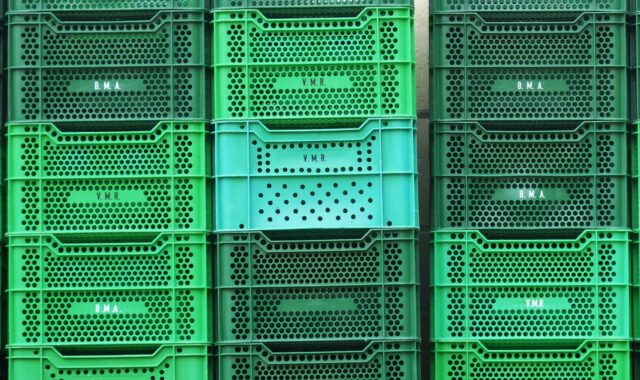
The label “stackable” can mean different things. Some bins are designed to nest when empty. Others are designed to stack when full. Some can do both, depending on the shape of the lid, rim, and base. The safer approach is to look for a stated stacking load or clear manufacturer guidance instead of relying on shape alone.
Stacking strength depends on several design details:
- Rim structure: Reinforced rims help spread weight across the bin walls.
- Base shape: A flat, supported base reduces stress points and improves stability on shelves.
- Lid fit: A lid that locks into the base of the bin above can reduce sliding.
- Wall thickness: Thin walls may bow under pressure, especially during long-term storage.
- Corner design: Strong corners are important because stacked weight often concentrates there.
Even when a bin looks stable, overstacking can create a tipping hazard or make lower bins difficult to inspect. As a practical rule of thumb, heavy contents should be stored in lower bins, lighter contents above, and frequently used items at waist-to-chest height where possible. This is not a substitute for workplace safety rules, but it reflects a basic storage principle: a stack is only as safe as its base, surface, and handling routine.
For shelving, check the shelf rating as well. A strong bin does not make an overloaded shelf safe. If bins are placed on mobile racks or carts, reduce stack height because movement increases the chance of shifting or tipping.
Use labels and separation to prevent material mix-ups
One of the main benefits of a stackable storage bin system is traceability. Plastic materials can look similar even when their properties differ significantly. Natural polypropylene pellets, nylon offcuts, polyethylene caps, and clear polycarbonate parts may be easy to confuse in a busy storage area. A consistent label system reduces that risk.
Useful labels do not need to be complicated. For household or workshop use, include the material name, date stored, source, and any warning such as “keep dry,” “food contact only,” or “not for heat.” In a light industrial setting, labels may also include lot number, resin grade, color, drying requirement, and inspection status.
A simple bin label can include:
- Material or item name
- Resin type if known
- Date received or packed
- Quantity or approximate weight
- Storage condition such as dry, dark, cool, sealed, or ventilated
- Handling note, including brittle, sharp edge, clean only, or food-contact use
Color coding can add another layer of control. For example, blue bins may hold clean parts, gray bins may hold offcuts, and red bins may hold rejected or quarantine material. The key is consistency. A color system that changes from shelf to shelf creates confusion instead of reducing it.
If stored materials are sensitive to moisture or contamination, use sealed inner bags or liners rather than relying only on the outer bin. This is especially important for resins and components that must remain clean before molding, assembly, or packaging.
Control moisture, dust, and odor inside the bin
A stackable bin can protect contents from dust and splashes, but it can also trap moisture and odor if items are stored too soon after cleaning or use. The U.S. Environmental Protection Agency recommends airtight, labeled containers for many bulk foods and points to cool, dry, dark, and well-ventilated places for certain produce. Although that guidance is food-focused, the broader storage principle also applies to plastic materials: control the environment around the item, not just the container around it.
For dry plastic materials, moisture control starts before packing. Allow washed parts or cleaned bins to dry completely. Do not close a lid over damp contents unless temporary containment is more important than long-term preservation. Condensation can affect paper labels, cardboard dividers, metal inserts, adhesives, and some moisture-sensitive resins.
Dust control is especially important for plastic pellets, machined plastic parts, and transparent components. Fine debris can become embedded in soft plastics, scratch surfaces, or create visible defects. Use lids or covers where cleanliness matters, and avoid storing open bins near sanding, cutting, grinding, or packaging waste. See also: Buying Guides.
Odor can also be a warning sign. Some plastics absorb smells from chemicals, smoke, fuel, or cleaning products. If a bin will be reused for sensitive contents, clean it thoroughly and allow it to air out before reuse. Do not use a bin that previously held strong chemicals for food, medical, or sensitive packaging materials.
Clean stackable bins without shortening their service life
Cleaning should remove residue without damaging the plastic. Harsh solvents, abrasive pads, and high heat can shorten bin life, cloud clear plastics, or weaken surfaces. For many bins, mild detergent, warm water, and a soft cloth are safer than aggressive cleaners. Always check the bin maker’s guidance if the bin has a special coating, antistatic property, gasket, or food-contact rating.
A practical cleaning routine includes four steps:
- Empty and inspect: Remove all contents and check for cracks, warped corners, loose lids, and sharp broken edges.
- Wash gently: Use a mild detergent solution unless stronger sanitation is specifically required and compatible with the plastic.
- Rinse fully: Residual cleaner can affect stored materials or create odor.
- Dry before closing: Air-dry bins completely before stacking them with lids attached.
For bins used around food or ingredients, follow applicable food-safety guidance. The USDA advises that raw meat, poultry, and seafood should be sealed or wrapped securely to prevent juices from contaminating other foods. The storage lesson is direct: if a bin is used to control contamination risk, separation and cleanability matter as much as the bin’s shape.
Do not ignore damaged bins. Cracks can hold residue and bacteria, while warped rims can make a stack unstable. A bin with a broken corner may still be useful for dry noncritical items, but it should not be used where sealing, cleanliness, or stack strength is important.
Compare open-front bins, lidded totes, and nesting containers
Different bin styles solve different storage problems. Choosing the wrong style can make a storage area look organized while still creating handling problems.
| Bin type | Useful for | Main limitation |
|---|---|---|
| Open-front stackable bin | Small parts, fasteners, labels, samples, frequently picked items | Less dust protection and less secure during transport |
| Lidded stackable tote | Longer-term storage, clean parts, household items, packaged materials | Contents are less visible unless the bin is clear or well labeled |
| Nesting container | Empty-bin storage, seasonal use, return logistics | May not be designed to carry heavy stacked loads when full |
| Vented bin | Items that need airflow or must dry after use | Allows dust and small debris to enter more easily |
| Clear plastic bin | Visual identification and household organization | May show scratches and may not offer the same impact strength as opaque industrial bins |
For plastic material storage, the best choice is often a mixed system. Open-front bins work well for active picking areas, while sealed totes are better for reserve inventory or dust-sensitive items. Nesting containers are useful when empty-bin space is limited, but they should not be treated as heavy-duty stacking containers unless the design supports that use.
Common mistakes to avoid
Most storage failures come from small decisions repeated over time. The bin itself may be adequate, but the system around it becomes unreliable.
- Using one bin for every job: A bin that works for light packaging may not work for dense resin, sharp offcuts, or chemical containers.
- Stacking by available space only: Stack height should reflect weight, access frequency, shelf strength, and floor stability.
- Skipping labels: Clear bins help, but they do not replace material identification and date control.
- Closing damp bins: Moisture can create odor, label failure, and contamination risk.
- Ignoring compatibility: Some cleaners, oils, solvents, and residues can affect plastic surfaces.
- Reusing unknown bins for sensitive contents: Previous exposure matters, especially for food-contact, medical, or clean components.
- Keeping damaged bins in heavy stacks: Cracked rims and warped bases reduce stability.
A better approach is to treat bins as part of a storage process. Define what goes into each bin, how it is labeled, where it is stacked, how it is cleaned, and when it should be retired. That process is more reliable than simply buying more containers.
Frequently asked questions
What size stackable storage bin should I choose?
Choose the smallest size that holds the material without crushing it or making the bin too heavy to lift safely. Smaller bins are often better for dense items, while larger bins work well for lightweight packaging, textiles, or bulky molded parts.
Can plastic storage bins be used for food?
Only use bins that are intended for food contact when unpackaged food will touch the container. A resin code or clear appearance is not enough to confirm food-contact suitability. If the bin was previously used for chemicals, tools, or unknown materials, do not repurpose it for food.
Are clear bins better than opaque bins?
Clear bins make contents easier to identify, which can reduce searching and duplicate purchases. Opaque bins may offer better light protection and can be more suitable when UV exposure, discoloration, or visual clutter is a concern.
How high can stackable bins be stacked?
There is no universal safe height. Follow the bin and shelving ratings, keep heavy bins low, and avoid tall stacks in areas with movement, vibration, children, forklifts, or frequent access. Stability matters more than the number of bins.
When should a bin be replaced?
Replace or downgrade a bin when it has cracked corners, a warped base, a loose lid, deep residue, strong odor, or damage that affects stack stability. For clean or sensitive storage, retire damaged bins sooner.
Key takeaways for better plastic material storage
A stackable storage bin works best when it is selected as part of a complete storage method. Match the plastic material and bin design to the environment, avoid excessive stack loads, label contents clearly, keep moisture under control, and clean bins in a way that does not damage them. For plastic materials, the most reliable storage system is one that protects the contents, remains easy to inspect, and can be maintained consistently over time.