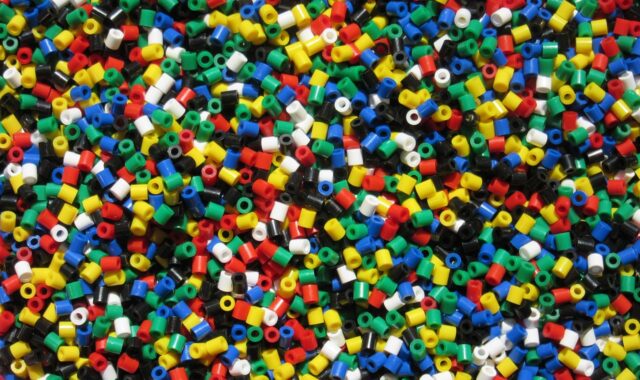
KuibyshevAzot engineering plastics and the PA6 value chain

a[data-rs-seo-link]{text-decoration:underline!important;color:#1a56db!important;cursor:pointer!important;}a[data-rs-seo-link]{text-decoration:underline!important;color:#1a56db!important;cursor:pointer!important;}
Why KuibyshevAzot engineering plastics matter
KuibyshevAzot engineering plastics are the downstream compounding side of a business built around caprolactam, polyamide-6 and related polymer systems. Public company materials describe three main product families: Volgamid based on PA6, PA66 and PA6/PA66 blends; Volgalen based on polypropylene; and Volgaplast based on PBT.
The strategic point is broader than the product list. KuibyshevAzot is a major Russian producer of caprolactam and polyamide, so its engineering plastics activity links basic polymer production with higher-value compounds for railway, automotive, electrical, electronics, construction and consumer applications. For material buyers, the potential advantage is a vertically connected PA6 supply chain. The caution is that recent public reporting also points to weaker 2025 demand and lower polymer-composite material volumes.
This article is based on information that can be checked against public company pages, the 2025 annual report approved in May 2026, the May 29, 2024 announcement about the India plant, and a May 4, 2026 RCC News summary of company reporting. It does not present KuibyshevAzot as a recommended supplier. Instead, it explains the industrial context for readers researching engineering plastics.
What the product portfolio includes
KuibyshevAzot’s engineering plastics pages divide the portfolio into three named compound groups. Each group serves a different balance of performance, processability and cost.
| Product family | Polymer base | Publicly described positioning | Typical selection logic |
|---|---|---|---|
| Volgamid | PA6, PA66 and PA6/PA66 blends | Compounds with fillers such as glass fiber, mineral fillers and modifying components | Used where strength, wear resistance, electrical performance and thermal resistance are more important than commodity-polymer cost |
| Volgalen | Polypropylene | PP compounds with glass fiber, talc, chalk, elastomer modifiers and additives | Useful when designers need lighter-weight structural parts, improved stiffness or impact performance at a lower cost than many engineering polymers |
| Volgaplast | PBT | PBT compounds with fillers, modifiers and additives | Often relevant for electrical, electronics and dimensionally stable molded parts, especially where moisture-related dimensional change must be limited |
The PA-based Volgamid range is the closest fit for the keyword “KuibyshevAzot engineering plastics” because PA6 is central to the company’s integrated caprolactam chain. The official Volgamid information describes glass-filled grades, heat-stabilized grades, impact-modified grades and flame-retardant PA6 grades. It also gives injection-molding guidance, including pre-drying when moisture content is above 0.2%, melt temperatures around 240-260°C and mold-surface temperatures around 60-80°C. These figures should be treated as product-page guidance, not as a substitute for the current technical data sheet for a selected grade.
How the PA6 value chain shapes the business
The most important background is KuibyshevAzot’s position in caprolactam and polyamide. Its 2025 public figures state a 53% share of Russian caprolactam production and a 100% share of Russian polyamide production. The company also states that it is a leading producer of PA6 in Russia, the CIS and Eastern Europe, and that it produces practically the full assortment of base polymer in Russia.
That vertical position matters because PA6 engineering compounds depend on feedstock continuity, polymer quality, viscosity control, additives, reinforcement and compounding know-how. A producer that makes caprolactam and PA6 can, in principle, connect resin availability with compound development. Integration, however, does not remove the normal qualification work. Molded-part performance still depends on grade consistency, conditioning state, moisture control, tool design, processing window and batch-level documentation.
For PA6 buyers, the practical takeaway is that KuibyshevAzot’s engineering plastics should not be assessed only as a catalog of compounds. They should be assessed as part of a wider upstream and downstream system that includes caprolactam, PA6 base resin, compounding assets, technical specifications and end-market demand.
Footprint and timeline from China to India
Public company materials show that KuibyshevAzot has used joint ventures and regional assets to extend its engineering plastics presence beyond its base in Togliatti, Russia. The timeline below highlights milestones relevant to engineering plastics, rather than fertilizer or other chemical businesses.
| Year | Milestone | Why it matters |
|---|---|---|
| 2007 | Production began at Kuibyshevazot Engineering Plastics (Shanghai) Co., Ltd. in China | Shows an early international route for polymer-composite and engineering-plastics activity |
| 2011 | Two joint ventures were formed with DSM Engineering Plastics in Togliatti | Added compounding and commercial capabilities in PA6-related materials; KuibyshevAzot later integrated these structures after DSM’s decision to exit assets in Russia |
| 2020 | PA6-based polymer-composite material production was launched at STFG in Germany | Expanded the company’s European portfolio and service reach, according to the annual report |
| May 29, 2024 | A new India joint production site for PA6-based polymer-composite materials opened in Sri City | Added a regional platform intended for the Indian domestic market |
| 2025 reporting cycle | Public reporting showed lower PA6 and polymer-composite material output | Highlights that market access and demand conditions still affect the downstream compound business |
The India project is especially notable because the company announcement provided specific commercial details: KuibyshevAzot’s share in Kuibyshevazot Engineering Plastics (India) Pvt. Ltd. was stated as 80%, with Indian partners holding 20%; investment was stated at 1 billion rubles; and capacity was stated at 14,000 tonnes per year. The same announcement said the materials were intended for India’s domestic market. For global buyers, that point is important because a regional plant does not automatically mean open export availability or identical grade availability in every market.
What 2025 reporting says about market pressure
The 2025 picture is more mixed than a simple expansion story. KuibyshevAzot’s public “figures” page for 2025 reports revenue of 80.185 billion rubles, EBITDA of 12.501 billion rubles, net profit of 8.256 billion rubles and 14.144 billion rubles of investment in production development and equipment renewal. Those numbers describe a large operating company that continued to invest, but they do not, by themselves, prove strength in engineering plastics.
For polymer readers, the more specific signal comes from the May 4, 2026 RCC News report summarizing company reporting for 2025. It said KuibyshevAzot produced 97.1 thousand tonnes of PA6 in 2025 and 7.9 thousand tonnes of polymer-composite materials. It also reported that polymer-composite material production was down 31.9%, engineering-plastics sales were down 41%, and 81% of engineering-plastics sales were glass-filled grades. The same report identified railway, automotive and electrical engineering as the key consuming segments.
Those figures need careful reading. They do not mean glass-filled PA6 is technically unattractive; glass fiber reinforcement remains a common route to higher stiffness, strength and heat resistance in PA-based molding compounds. Rather, the data suggest that the company’s 2025 downstream compound sales were exposed to demand and market-access pressures. Buyers comparing PA6 compounds should therefore look beyond nominal grade names and ask for current evidence on availability, lead time, certification status and batch consistency. See also: Buying Guides.
Where these materials fit in engineering applications
The official product pages list a broad set of application areas. Volgamid is presented for railway transport, automotive and special vehicles, structural products and electrical applications used under elevated loads and temperatures. Volgalen is described for machine building, automotive, transport, aviation, electrical engineering, instruments, household appliances and other industrial fields. Volgaplast is positioned for electrical, electronics and other structural products that benefit from mechanical strength, heat resistance, chemical resistance and dimensional stability.
From an engineering perspective, the material families play different roles:
- Glass-filled PA6 and PA66 compounds are candidates for brackets, housings, gears, bushings, electrical components and other parts where load-bearing performance is required, but moisture absorption and conditioning must be managed.
- Modified PP compounds can reduce cost and density in semi-structural components, especially when stiffness or impact performance can be achieved with fillers and modifiers.
- Glass-filled PBT compounds are often considered for electrical and electronic parts where dimensional stability, heat resistance and insulation performance are important.
None of these categories should be specified by resin name alone. A design team should compare tensile properties, flexural modulus, impact behavior, heat deflection temperature, flammability classification, comparative tracking index where relevant, moisture behavior, color requirements and processing guidance. The supplier’s current technical specification should always take precedence over general portfolio descriptions.
Buyer checklist for evaluating KuibyshevAzot grades
Because public information gives a portfolio-level view but not every live commercial detail, buyers should use a structured qualification checklist before replacing an existing PA6, PP or PBT compound.
- Confirm the exact grade and revision. Similar names can hide meaningful differences in glass content, stabilization, flame-retardant package or impact modifier.
- Request current technical and safety documentation. Product-page processing ranges are useful starting points, but the current technical data sheet and safety data sheet should be the controlling documents.
- Check moisture and drying requirements. PA compounds are sensitive to moisture before processing and to conditioning after molding; uncontrolled moisture can change part performance.
- Validate molding on production tooling. A compound that performs well in a test plaque may still need gate, venting, screw, drying and mold-temperature adjustments.
- Review supply route and lead time. Public reporting shows regional assets in Russia, China, Germany and India, but availability can differ by region, grade and customer status.
- Verify compliance needs. Electrical, railway and automotive parts may require flammability, tracking, aging, odor, emissions, color or customer-specific approvals.
- Compare against incumbent materials. Use side-by-side testing against the current resin, not only datasheet-to-datasheet comparison.
This approach is especially important in 2026 because the most recent public reporting points to market pressure in 2025. Buyers should not assume that a catalog family automatically reflects stable stock, unchanged specifications or identical service conditions in every market.
Frequently asked questions
Is KuibyshevAzot mainly a PA6 engineering plastics producer?
Its engineering plastics activity is strongly linked to PA6 because the company is vertically integrated in caprolactam and polyamide. However, the public product portfolio also includes PP-based Volgalen and PBT-based Volgaplast compounds, so it is not limited to PA6.
What is the difference between Volgamid, Volgalen and Volgaplast?
Volgamid is based on PA6, PA66 and their blends; Volgalen is based on polypropylene; and Volgaplast is based on PBT. The families target different performance-cost balances, processing windows and application areas.
Did KuibyshevAzot open an engineering plastics plant in India?
Yes. On May 29, 2024, the company announced the opening of PA6-based polymer-composite material production in Sri City, India. The announced capacity was 14,000 tonnes per year, and the company said the output was intended for the Indian domestic market.
What changed in 2025?
Public 2025 reporting showed lower output and sales in several polymer-related areas. RCC News reported on May 4, 2026 that polymer-composite material production was 7.9 thousand tonnes in 2025 and that engineering-plastics sales fell 41%. This makes supply qualification and recent availability checks especially important.
Can these materials replace an existing PA6 or PBT grade directly?
Not without validation. Even when the base polymer and glass content appear similar, differences in additives, viscosity, stabilization, moisture behavior and processing window can affect molded-part performance. Any replacement should be tested on the target application and production tooling.