PTM engineering plastics and the POM resin supply chain transition

a[data-rs-seo-link]{text-decoration:underline!important;color:#1a56db!important;cursor:pointer!important;}a[data-rs-seo-link]{text-decoration:underline!important;color:#1a56db!important;cursor:pointer!important;}
What PTM Engineering Plastics refers to
PTM engineering plastics should be read first as a company and supply chain term, not as a separate polymer family. In public industry records, PTM refers to PTM Engineering Plastics (Nantong) Co., Ltd., a Nantong, Jiangsu based producer associated with polyacetal, better known as POM. For resin buyers and component designers, the important point is that older documents may still name PTM as the producer, while newer Daicel and High Performance Polymers documents show a transition around the Nantong POM footprint. Before approving a material, confirm the current legal supplier name, grade code, certificate scope and technical data sheet.
For broader material-family context, dhprotech’s engineering plastics section covers thermoplastics selected for strength, wear resistance, dimensional stability and heat performance.

Why the term is tied to POM resin
Global Polyacetal company history identifies PTM Engineering Plastics (Nantong) Co., Ltd. as a POM resin manufacturing company in China indirectly invested by GPAC, and records PTM’s establishment in 2001. That makes the PTM name especially relevant when reviewing legacy material approvals, academic papers, automotive part files or supplier declarations that reference POM material made in Nantong.
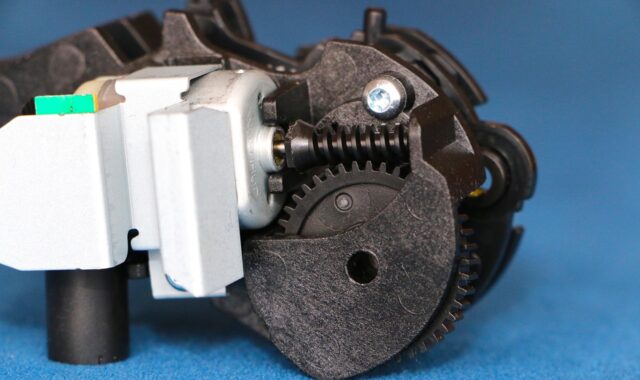
POM, also called polyacetal or acetal, is a semi-crystalline engineering thermoplastic used where molded parts need stiffness, low friction and stable dimensions. It is common in gears, clips, sliding parts, fuel system components, precision housings, office equipment and small mechanisms. Producer guides and engineering references usually highlight POM’s wear behavior, fatigue resistance, low moisture absorption and good processability as reasons it is selected over commodity plastics. Those advantages do not remove the need for grade-level review, because reinforced, lubricated, impact-modified and low-emission grades can behave very differently.
PTM should therefore not be treated as a substitute name for all engineering plastics. It is more accurate to treat it as a production and corporate reference connected with POM resin. If a drawing, bill of materials or resin approval list says PTM, the next step is to identify the exact grade and current supply route rather than assume equivalence with any acetal resin.
The Nantong timeline that affects supplier interpretation
The most useful information for specifiers is not only that PTM existed, but that public records show a transition in the Nantong POM network. Daicel and related company materials indicate that the engineering plastics business has moved through reorganization, website migration and updated naming. This does not automatically invalidate older PTM references, but it does mean procurement teams should not rely on a legacy company name alone.
| Date or period | Public record context | Why it matters |
|---|---|---|
| 2001 | Global Polyacetal history records PTM as established in the POM product history. | Older technical files may correctly reference PTM as a historical POM producer. |
| April 23, 2024 | A BSI IATF 16949:2016 certificate for PTM lists the scope as design and manufacture of polyacetal POM engineering plastics, with validity shown to April 22, 2027. | The certificate supports the quality-system context, but buyers should verify the current legal entity and active certificate before shipment. |
| August 2024 | Daicel’s 2025 ESG data note states that PTM Engineering Plastics (Nantong) Co., Ltd. stopped operation from August 2024 for the reporting period. | This is a key warning against assuming PTM is the current operating plant name. |
| November to December 2024 | Daicel public materials describe the start of POM commercial production or operation by DP Engineering Plastics (Nantong) around this period. | The Nantong POM footprint appears to have shifted from legacy PTM operation toward DP Engineering Plastics. |
| April 1, 2026 | Daicel announced that the business of Polyplastics was transferred to Daicel and would continue under the High Performance Polymers SBU. | New documents may use Daicel HPP related names rather than older Polyplastics or PTM naming. |
| June 2026 | Daicel’s public certification list names DP Engineering Plastics (Nantong) and Daicel HPP (Nantong) with ISO 9001, IATF 16949 and ISO 14001. | Current certificates and supplier declarations should be requested under the entity responsible for production and sale. |
What quality certifications can and cannot tell you
Quality management certifications are important in automotive and other controlled applications, but they are often misunderstood. IATF 16949 is an automotive quality management system standard. A certificate can confirm that a defined site and scope are managed under an audited system, but it does not prove that every resin grade is suitable for every component. It also does not replace incoming inspection, part validation or application testing.
For PTM-linked records, the practical question is scope continuity. A legacy certificate may show design and manufacture of POM engineering plastics, while newer corporate pages may list DP Engineering Plastics or Daicel HPP entities. When a resin is used in an approved automotive part, a name change, plant change or grade transfer may trigger customer notification, PPAP updates, material requalification or supplier change review. The depth of review depends on the customer’s rules and the risk level of the part.
Engineering teams should ask for the latest certificate, the exact manufacturing site, resin grade designation, safety data sheet, technical data sheet, material declaration and certificate of analysis format. If the part has safety, fuel, electrical or dimensional requirements, the documentation package should also include evidence that the grade used today matches the previously approved grade or has been formally approved as an alternative.
How POM should be evaluated in a real design
POM is attractive because it fills a gap between commodity plastics and higher-cost engineering polymers. Compared with many general-purpose materials, it offers better stiffness, lower friction and more reliable dimensional control in moving assemblies. It can reduce noise and weight in small mechanisms and can be easier to mold than some high-temperature polymers. However, POM is not a universal solution.
- Check the environment. POM can perform well in many mechanical and chemical conditions, but grade data must be checked for exposure to fuels, cleaning agents, hot water, strong acids, oxidizers and UV.
- Review the temperature window. Processing and service temperatures should stay within the resin producer’s guidance. Overheating during molding can create degradation risks and poor part quality.
- Confirm wear pairing. A good POM grade in one sliding pair may not perform the same against another metal, coating or plastic. Lubricated grades require their own testing.
- Validate shrinkage and tolerances. POM is widely used for precision parts, but mold design, fiber content, orientation and conditioning still affect final dimensions.
- Do not mix up homopolymer and copolymer assumptions. POM-H and POM-C have different performance profiles. Public PTM references normally identify POM broadly, so the grade sheet must settle the exact resin type.
For buyers reading PTM Engineering Plastics on a material file, the right question is not simply whether POM is a strong engineering plastic. The right question is whether the named grade, manufacturing route and quality documents match the actual part requirements today. See also: Buying Guides.
Procurement checks for legacy PTM references
Legacy supplier names can create avoidable risk when purchasing resin or approving a molded component. If a part specification lists PTM Engineering Plastics, procurement should avoid replacing that reference with a similar-sounding POM source without engineering approval. A supplier name may be historical, but the grade approval behind it may still be tied to a specific resin formulation, plant, color, additive package or quality system.
A practical review should include five checks. First, confirm whether the current shipper is PTM, DP Engineering Plastics, Daicel HPP or another sales entity. Second, compare the old and new grade names line by line, including melt flow rate, density, tensile properties, flexural modulus, impact behavior, shrinkage and heat deflection data. Third, ask whether any raw material, plant, process or formulation change has occurred. Fourth, verify regulatory and customer declarations such as RoHS, REACH, food contact or automotive restricted substance lists where they apply. Fifth, keep a written approval trail so future audits can understand why the material was accepted.
This approach is especially important for moving parts, clips, gears, fuel-contact applications and electrical components. In these uses, a material that looks equivalent on a short datasheet may still fail because of creep, fatigue, lubrication compatibility, molding shrinkage or long-term chemical exposure.
Frequently asked questions
Is PTM Engineering Plastics a type of plastic?
No. PTM Engineering Plastics refers to a company name, most commonly PTM Engineering Plastics (Nantong) Co., Ltd. The material most strongly associated with the name in public records is polyacetal or POM engineering plastic.
Is PTM still the current production name for Nantong POM?
Public records suggest a transition. Daicel’s 2025 ESG data noted that PTM stopped operation from August 2024, while Daicel materials describe DP Engineering Plastics (Nantong) beginning POM production around late 2024. Daicel’s 2026 certification list also highlights DP Engineering Plastics and Daicel HPP (Nantong). Buyers should verify the current entity directly through supplier documents.
Does IATF 16949 mean the resin is automatically approved for automotive use?
No. IATF 16949 supports the quality management system for a defined scope, but automotive material approval still depends on the grade, customer specification, part function, PPAP requirements and validation testing.
What should I request if an old drawing specifies PTM POM?
Request the current grade datasheet, safety data sheet, certificate of analysis format, manufacturing site, active quality certificates and a written statement explaining any entity, plant or grade-name change. If the component is critical, require engineering reapproval before substitution.
When is POM a poor material choice?
POM may be unsuitable where the part faces incompatible chemicals, excessive heat, prolonged UV exposure without stabilization, very high impact requirements or a need for transparent appearance. Final selection should always be based on grade data and application testing.