PBT polymer guide for practical material selection
a[data-rs-seo-link]{text-decoration:underline!important;color:#1a56db!important;cursor:pointer!important;}a[data-rs-seo-link]{text-decoration:underline!important;color:#1a56db!important;cursor:pointer!important;}
How to think about PBT polymer selection
PBT polymer, short for polybutylene terephthalate, is a semi-crystalline thermoplastic polyester used when a molded part needs a practical balance of stiffness, dimensional stability, electrical insulation, chemical resistance and efficient injection molding. It is commonly considered for connectors, housings, sensor components, appliance parts and under-hood automotive applications.
It should not be treated as a universal substitute for nylon, PET, POM or PC/ABS. The right choice depends on the grade design, moisture control before molding, flame-retardant requirements, exposure to hot water or humidity, and the mechanical loads the part will carry in service. For broader context on material choices, see this polymer selection resource.
What PBT polymer is and why it is used
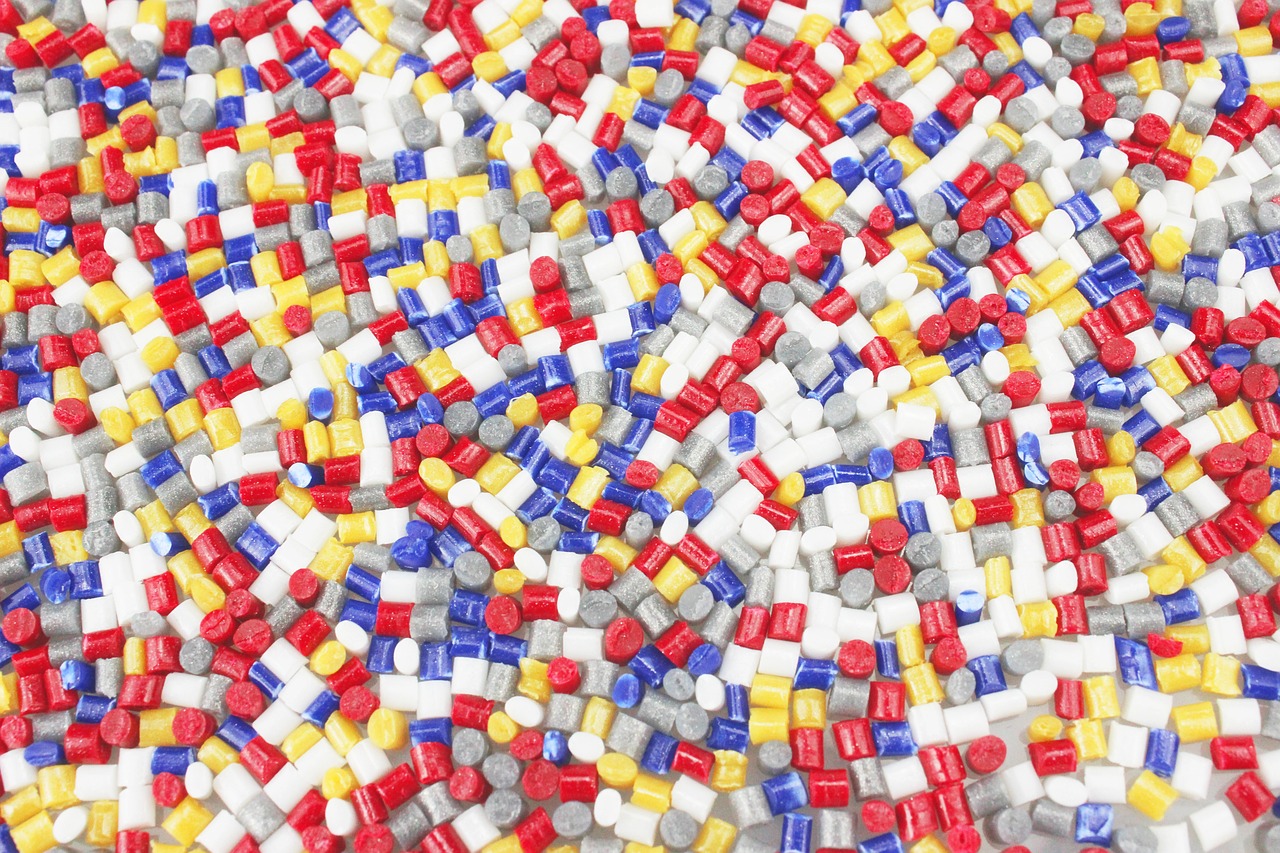
PBT belongs to the polyester family and is usually supplied as pellets for melt processing, especially injection molding. Its semi-crystalline structure gives it a useful mix of chemical resistance, relatively low moisture uptake compared with many polyamides, good dimensional control and stable electrical properties across many service conditions. These characteristics explain why PBT is frequently used in electrical and electronic components where insulation performance and shape retention are both important.
Technical literature from resin producers such as BASF, Celanese and Asahi Kasei commonly describes PBT as offering good stiffness, heat resistance, electrical insulation and resistance to many oils, fuels and common chemicals. Public molding guidance from Autodesk Moldflow and resin suppliers also emphasizes a key processing point: PBT can mold efficiently, but it must be dried properly because polyester chains are vulnerable to hydrolysis during high-temperature processing when excess moisture is present.
In practical selection work, PBT is chosen less for one standout property than for its ability to meet several requirements at the same time. A connector body, for example, may need dielectric strength, flame performance, dimensional repeatability, thin-wall flow and chemical resistance. PBT grades can be formulated with glass fiber, minerals, impact modifiers, flame retardants, hydrolysis stabilizers or laser-marking packages to match those requirements.
Key properties that matter in material selection
The main question is not simply whether the base PBT polymer appears suitable. Grade, reinforcement level and test conditions matter. A 30% glass-fiber reinforced PBT will behave very differently from an unfilled, impact-modified or flame-retardant grade. Data sheets should be compared using consistent test methods, such as ISO 527 or ASTM D638 for tensile behavior. Flammability data should be checked at the wall thickness intended for the finished part.
| Selection factor | Typical PBT implication | Design note |
|---|---|---|
| Stiffness and strength | Good in unfilled grades and much higher in glass-filled grades | Check weld lines, ribs and fiber orientation, not only data-sheet tensile values |
| Dimensional stability | Generally favorable because moisture uptake is relatively low compared with many nylons | Glass fiber improves stiffness but can increase anisotropic shrinkage and warpage risk |
| Electrical insulation | Common reason for use in connectors, switches and housings | Verify dielectric, CTI, arc resistance and flame rating for the exact grade and thickness |
| Chemical resistance | Often good against oils, fuels and many solvents | Strong alkalis, strong acids, hot water and long-term humid heat need specific validation |
| Heat performance | Useful for many electrical and automotive environments, especially when reinforced | Use heat aging and dimensional tests under real load, not only melting point or HDT |
| Processing | Well suited to injection molding and short cycles in many designs | Drying discipline is critical to avoid molecular weight loss and brittle molded parts |
A common error is treating published values as guaranteed part performance. Supplier data are usually measured on standardized specimens under defined laboratory conditions. Real parts include gates, knit lines, thin sections, sharp corners, molded-in stress, inserts and a specific exposure history. For critical applications, material choice should move from data-sheet screening to prototype testing and then to production validation.
Where PBT performs well
Electrical and electronic components
Electrical applications are a natural fit for PBT because the material can combine insulation performance, dimensional precision and moldability. Typical uses include connector housings, coil bobbins, relay parts, switch components, terminal blocks and appliance parts. When flame performance is required, designers usually look for grades rated under UL 94 at the intended wall thickness. For some appliances and electrical parts, glow-wire performance under IEC 60695 methods may also be relevant.
A UL 94 V-0 listing or a glow-wire result should not be read as proof that a finished product is safe in every fire scenario. These are standardized material tests. They help compare material behavior under controlled conditions, but finished-product safety still depends on part geometry, surrounding components, ventilation, ignition sources and the applicable product standard.
Automotive and e-mobility parts
PBT is often specified for automotive electrical and under-hood components because it can resist many automotive fluids while maintaining dimensional stability. Applications may include sensors, connectors, fuse boxes, control-unit housings and motor-related electrical parts. In e-mobility, the same selection logic applies, but requirements can become more demanding because of higher voltage, compact packaging, thermal cycling and long expected service life.
Hydrolysis-resistant PBT grades are often used when hot and humid exposure is expected. That does not mean every PBT grade is hydrolysis-resistant. It means the designer should specify and test a grade formulated for humid heat when the part may face under-hood moisture, splash, condensation or long-term elevated temperature.
Industrial and consumer products
PBT can also be useful in industrial controls, small mechanisms, power tools, household appliances and consumer electrical products. Its good surface finish, stable dimensions and compatibility with glass reinforcement make it attractive for precision molded parts. In some designs, PBT competes with polyamide, POM, PET, PC/ABS or high-performance polypropylene compounds, depending on load, temperature, chemical exposure and appearance requirements.
Limits and risks that should be checked early
Moisture and hydrolysis during molding
The most important processing limitation is moisture sensitivity at melt temperature. PBT does not absorb water as aggressively as many nylons in service, but residual moisture in pellets can cause hydrolysis during processing. Hydrolysis cuts polymer chains, lowers molecular weight and may lead to reduced toughness, lower strength or brittle failure. Supplier drying recommendations should therefore be treated as process requirements, not optional advice.
Drying conditions vary by grade and packaging history, so the resin supplier’s technical data sheet remains the controlling document. Processors should also monitor hopper residence time, dew point, regrind use and hot-runner conditions. A molded part may look acceptable while already having lost mechanical performance if the melt was processed with too much moisture.
Long-term hot water and humid heat exposure
PBT’s polyester chemistry means long-term exposure to hot water, steam or high-temperature humidity can become a durability issue. This risk is especially important for sealed connectors, under-hood parts, appliances exposed to condensation and components near heated fluids. Hydrolysis-resistant grades can improve performance, but they should be validated with aging tests that reflect actual temperature, humidity, stress and exposure duration. See also: Buying Guides.
Chemical resistance is not universal
PBT is often described as chemically resistant, but chemical resistance always depends on concentration, temperature, exposure time, stress level and molded-part quality. Oils and many hydrocarbons may be manageable, while strong acids, strong bases and hot aqueous environments can be more problematic. Environmental stress cracking can also occur when chemical exposure combines with molded-in stress or sharp part geometry.
Glass fiber brings benefits and trade-offs
Glass-filled PBT grades increase stiffness, strength and heat deflection performance, but they also introduce design trade-offs. Fiber orientation can create different shrinkage in the flow and cross-flow directions, which may affect flatness and tolerances. Glass fibers can also reduce surface smoothness, increase tool wear and make knit-line strength more critical. Thin-wall connector designs should be checked for flow length, weld-line position and ejector-related stress.
PBT compared with common alternatives
PBT often appears on the same shortlist as nylon, PET, POM and PC/ABS. The right choice depends on the dominant failure mode. If water absorption and dimensional change are the biggest concerns, PBT may compare favorably with many nylon grades. If fatigue, wear or snap-fit toughness dominate, another polymer may be stronger. If transparency or high impact appearance is required, PBT is usually not the first choice.
| Alternative | Where it may beat PBT | Where PBT may have an advantage |
|---|---|---|
| Polyamide, such as PA6 or PA66 | Often strong in toughness, fatigue and wear, depending on grade | Lower moisture uptake can give PBT better dimensional consistency in humid service |
| PET engineering polyester | Can offer higher stiffness and heat performance in some reinforced grades | PBT often processes more easily in injection molding and crystallizes faster |
| POM acetal | Excellent friction and wear behavior for gears and moving parts | PBT is often stronger in electrical insulation and flame-retardant connector applications |
| PC/ABS | Good impact toughness, appearance and housing applications | PBT can provide better chemical resistance and dimensional stability in many technical parts |
| High-performance PP compounds | Lower density and often lower cost | PBT generally provides higher stiffness, heat capability and electrical application history |
This comparison is only a screening tool, not a final specification. A flame-retardant PBT, a hydrolysis-resistant PBT and a 30% glass-filled PBT are effectively different engineering options. The same applies to competing polymers. Grade-level comparison is essential.
Grade selection and validation checklist
A disciplined selection process reduces the risk of choosing PBT for the wrong reason. Start with the application environment, not with a generic property table. Define temperature range, mechanical load, wall thickness, flame requirement, electrical requirement, chemicals, humidity, life expectancy, regulatory constraints and assembly method. Then screen grades designed for those conditions.
- Confirm the function. Identify whether the part is structural, insulating, cosmetic, sealing, load-bearing or primarily a carrier for metal contacts.
- Set the thermal envelope. Include short-term peaks, continuous service temperature, heat aging and thermal cycling.
- Specify electrical requirements. Review dielectric strength, comparative tracking index, arc resistance and required flame classification at actual thickness.
- Define exposure. List oils, fuels, cleaners, electrolytes, humidity, water immersion or condensation conditions.
- Check processing risk. Require drying, moisture measurement where appropriate, and control of regrind, hot runners and residence time.
- Validate part geometry. Use flow analysis, prototype molding and dimensional studies to assess warp, shrinkage, knit lines and fiber orientation.
- Run application testing. Combine heat, humidity, chemical exposure and mechanical load when the real part will experience them together.
For many projects, the most useful evidence comes from a side-by-side grade comparison using the same molded-part test. Instead of comparing only data sheets, mold the candidate PBT grades and one or two alternative polymers in representative geometry. Test them after conditioning, heat aging and chemical exposure. This approach often reveals differences in weld-line strength, dimensional drift and embrittlement that standard plaques may not show.
Frequently asked questions
Is PBT polymer the same as PET?
No. PBT and PET are both thermoplastic polyesters, but they are not interchangeable. PBT generally crystallizes faster and is often easier to injection mold, while PET engineering grades can offer different stiffness and heat-performance profiles. The best choice depends on grade and application conditions.
Is PBT better than nylon?
Neither material is universally better. PBT often has an advantage when lower moisture uptake and dimensional stability are important. Nylon may be preferred for certain toughness, fatigue or wear requirements. Reinforcement, conditioning and exposure conditions can change the comparison significantly.
Why does PBT need drying before molding?
PBT is a polyester, and moisture at melt temperature can cause hydrolysis. That reaction reduces molecular weight and can weaken the molded part. Drying should follow the resin supplier’s grade-specific recommendation, and processors should control hopper conditions and residence time.
Can PBT be used outdoors?
Some PBT grades can be formulated for improved weathering, but standard grades should not be assumed suitable for outdoor UV exposure. If sunlight, heat, moisture and mechanical stress are expected, use a weathering-stabilized grade and validate color, surface, impact and mechanical retention after exposure testing.
What is the main reason to choose PBT?
The main reason is balanced performance. PBT is attractive when one molded part needs electrical insulation, dimensional stability, good chemical resistance, stiffness and efficient processing. The main caution is to verify hydrolysis resistance, flame rating, wall thickness and real exposure conditions before final approval.