How plastic product manufacturing connects material selection, process choice and product applications

a[data-rs-seo-link]{text-decoration:underline!important;color:#1a56db!important;cursor:pointer!important;}a[data-rs-seo-link]{text-decoration:underline!important;color:#1a56db!important;cursor:pointer!important;}
Plastic product manufacturing starts with the application
Plastic product manufacturing is more than shaping resin into a finished part. It is a linked set of decisions that starts with the product application: what the part must hold, protect, seal, carry, insulate, flex, display or survive. A packaging film, a machine guard, an appliance housing, a fluid fitting and a reusable food container may all be plastic products, but they rarely need the same resin, tooling method, tolerance strategy or compliance review. Under NAICS 3261, the U.S. Census Bureau describes plastics product manufacturing as processing new or spent plastic resins into intermediate or final products through methods such as compression molding, extrusion, injection molding, blow molding and casting. (census.gov)
For teams comparing product applications, the useful question is not simply “Which plastic is strongest?” It is: what combination of material behavior, manufacturing process, part geometry and quality control will meet the end-use requirement without adding unnecessary cost or risk? More application-focused material topics are collected in Product Applications.
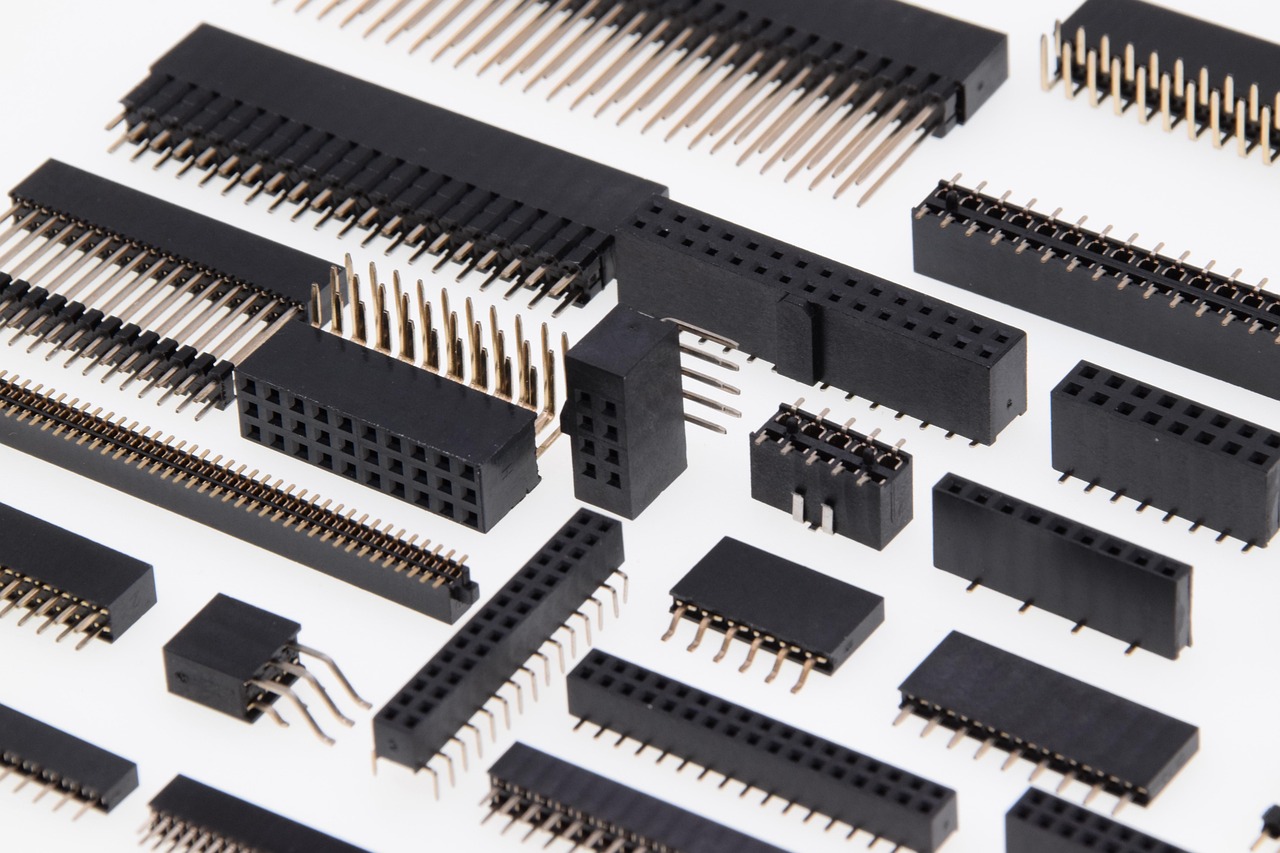
Application requirements decide the manufacturing route
Most plastic products can be made in more than one way, but each process has a natural fit. The right route depends on part size, wall thickness, annual volume, surface finish, dimensional repeatability, mechanical loading, tooling budget and any secondary operations. The table below summarizes common application needs and the process families often considered during early product planning.
| Application need | Common process options | Why it may fit | Key watch point |
|---|---|---|---|
| High-volume housings, caps, clips and precision components | Injection molding | Repeatable shapes, integrated features and efficient production after tooling | Tooling cost, gate design, shrinkage and tolerance planning |
| Continuous profiles, sheet, film, pipe and tubing | Extrusion | Efficient for long products with a consistent cross-section | Die design, cooling control and dimensional stability |
| Bottles, tanks and hollow containers | Blow molding or rotational molding | Designed for enclosed hollow forms | Wall distribution, impact resistance and closure or fitting design |
| Large trays, covers and packaging inserts | Thermoforming | Good for formed sheet products and lower tooling complexity | Material thinning, trimming waste and detail definition |
| Thermoset, composite or reinforced parts | Compression molding or transfer molding | Useful when heat resistance, stiffness or reinforcement is required | Cycle time, flash control and post-mold finishing |
| Short-run prototypes, jigs and complex low-volume shapes | Polymer additive manufacturing | Supports design iteration before production tooling | Material equivalence, surface finish and production scalability |
This process-first view helps prevent a common planning error: selecting a plastic grade before the manufacturing method is understood. A resin that works well in an extruded profile may not fill a thin-wall injection mold in the same way. A material that performs in a machined prototype may show different shrinkage, knit-line strength or surface appearance when it is molded.
Material selection is an application decision, not only a price decision
Material choice should begin with service conditions. Key factors include temperature range, chemical exposure, UV exposure, mechanical load, impact risk, food or skin contact, flame behavior, electrical properties, color stability and expected product life. Commodity resins such as polyethylene and polypropylene are widely used where weight, toughness and cost are central requirements. Engineering plastics such as polycarbonate, nylon, acetal, ABS and thermoplastic elastomers are considered when a part needs higher stiffness, impact performance, wear resistance, dimensional control or a specific tactile feel.
Processing conditions also affect performance. NIST describes polymer processing as a field where the structure formed during the liquid-to-solid transition affects material properties, and where measurement science supports process and material development. In practical terms, melt temperature, cooling rate, orientation, moisture control and crystallinity are not minor shop-floor details; they can influence warpage, strength, clarity and long-term reliability. (nist.gov)
Regulated applications need an additional filter. For food-contact plastics in the United States, the FDA explains that components used in food packaging must have an appropriate regulatory status, including compliance with relevant provisions in 21 CFR Parts 174 through 179 or another applicable pathway. FDA guidance on recycled plastics for food packaging also states that manufacturers are responsible for ensuring recycled material is of suitable purity for the intended use and meets applicable specifications. (fda.gov)
That regulatory point has direct commercial impact. A recycled-content claim, a lower-cost additive package or a material substitution may look attractive, but it should not be treated as a drop-in change for food-contact, medical, electrical, automotive or building applications unless the compliance basis and performance data are reviewed for the specific use.
Design rules that reduce risk before tooling
In plastic product manufacturing, many expensive problems begin in the drawing. Plastics shrink, bend, creep and cool differently from metals. They can also show anisotropy, sink marks, weld lines, stress whitening or warpage when geometry and process conditions are poorly matched. Good design for manufacturing does not remove all variation, but it makes variation easier to control.
ISO 20457:2026, published in August 2026, provides a plastics-specific framework for geometrical and dimensional tolerances and acceptance conditions for molded parts. ISO notes that plastic molded parts can have greater variation than metal parts because of material behavior, molding shrinkage, processing conditions, geometry, warpage and non-uniform cooling. The standard applies to non-porous molded parts made from thermoplastics, thermoplastic elastomers and thermosets across processes including injection molding, compression molding, transfer molding, injection compression molding and rotational molding. (iso.org)
Several design habits are especially useful across applications:
- Specify functional tolerances, not wish-list tolerances. Tight dimensions should be reserved for features that control fit, sealing, alignment, assembly or safety.
- Design wall sections for flow and cooling. Abrupt wall changes can increase sink, voids, residual stress and cycle-time pressure.
- Plan draft, radii and shutoffs early. These details affect ejection, tool life, surface quality and the risk of flash or drag marks.
- Match ribs and bosses to the load path. Reinforcement should add stiffness without creating thick heat-retaining zones.
- Confirm measurement conditions. Plastic parts can change dimensions with time, temperature and humidity, so inspection conditions should be agreed before production approval.
Quality, safety and compliance checkpoints
A practical manufacturing plan should include checkpoints from resin receipt through shipment. Common controls include material certificates, lot traceability, moisture checks for hygroscopic resins, machine setup records, first-article inspection, in-process dimensional checks, visual defect standards and packaging controls. For critical parts, teams may also use capability studies, accelerated aging, chemical resistance tests, drop tests, torque tests or assembly trials.
Worker safety is also part of manufacturing quality. Plastic processing equipment can involve rotating screws, heated barrels, presses, hydraulic systems, granulators, conveyors and trimming equipment. OSHA’s lockout/tagout standard, 29 CFR 1910.147, addresses the control of hazardous energy during servicing and maintenance in general industry, and OSHA also points to machine guarding requirements under general industry standards. (osha.gov)
Environmental management should be considered during process selection, especially for applications involving styrene, solvents, additives, scrap generation or composite operations. EPA’s Toxics Release Inventory National Analysis for reporting year 2023 reported 3.3 billion pounds of TRI chemical releases across reporting facilities and a 21 percent decrease in releases compared with 2014, with important limitations in how TRI data should be interpreted. Older EPA sector information for 2021 identified air releases and styrene as important issues for the plastics product manufacturing sector, showing why pollution prevention and material substitution remain relevant in some application areas. (epa.gov) See also: Buying Guides.
What is changing in plastic product manufacturing
Several changes are shaping how manufacturers and product teams discuss plastics. One is a stronger focus on realistic tolerancing. The publication of ISO 20457:2026 gives designers, molders, toolmakers and material suppliers a more current reference point for agreeing what is technically achievable for molded plastic parts. It does not make every tolerance easy to hold, but it gives teams a better language for separating functional requirements from unnecessary precision.
Material transparency is also becoming harder to separate from engineering work. Recycled content, chemical restrictions, food-contact suitability, PFAS-related reporting and customer sustainability requirements can affect resin sourcing, color choice, additive packages, documentation and end-of-life options. The safe conclusion is not that every plastic product should use recycled material. Recycled or alternative materials should be evaluated against the application’s compliance, mechanical and processing requirements.
Process control is another important area. Sensors, machine data, automated handling and tighter inspection systems can help manufacturers understand variation earlier, but they do not replace good part design. A poorly gated mold, an unrealistic tolerance or a resin mismatch will still create problems even in a highly automated cell.
A decision checklist for product applications
Before committing to resin, tooling or production volume, product teams can use the following checklist to align application intent with manufacturing reality:
- What is the part’s primary function: protection, movement, sealing, insulation, appearance, structure or containment?
- What loads, temperatures, chemicals, weathering conditions and cleaning agents will the product face?
- Does the application require food-contact, medical, electrical, flame, automotive or building-code review?
- Is the expected volume high enough to justify production tooling, or is a lower-volume route more appropriate?
- Which dimensions are truly critical to function, and which can use general tolerances?
- Will the part need secondary operations such as welding, printing, coating, machining, assembly or sterilization?
- Can the design reduce scrap through uniform walls, efficient nesting, runner recovery or simplified trimming?
- What inspection method will prove that the finished part meets the application requirement?
The main takeaway is practical: plastic product manufacturing works best when the application leads. A successful part is not defined by the resin name alone. It comes from matching material behavior, process capability, design details, compliance obligations and quality controls to a clearly understood use case.
Frequently asked questions
What is included in plastic product manufacturing?
It generally includes converting new or recycled plastic resins into intermediate or finished products through processes such as injection molding, extrusion, blow molding, compression molding, rotational molding, thermoforming and casting. The exact route depends on the product application and production requirements.
How do I choose the right plastic manufacturing process?
Start with the part’s function, geometry, volume and tolerance needs. Injection molding often fits repeatable high-volume parts with detailed features. Extrusion fits continuous profiles, film, sheet and tubing. Blow molding and rotational molding fit hollow products. Thermoforming fits formed sheet applications and packaging trays.
Why are plastic tolerances different from metal tolerances?
Plastic parts are affected by shrinkage, cooling rate, material stiffness, moisture, geometry and warpage. Because of these variables, metal-style tolerance assumptions can create unrealistic requirements for molded plastic components.
Can recycled plastic be used in product manufacturing?
Yes, but the decision depends on the application. Recycled material must meet performance, processing and regulatory requirements. For food-contact uses, FDA guidance emphasizes that recycled plastic must be suitable for its intended use and meet applicable specifications.
What should be reviewed before changing a plastic material?
Review mechanical performance, thermal behavior, chemical resistance, color, shrinkage, compliance status, processing window, supplier documentation and inspection results. Even materials in the same polymer family can behave differently in production.